What is IFS and IFIO and how do they relate to me and my horse?
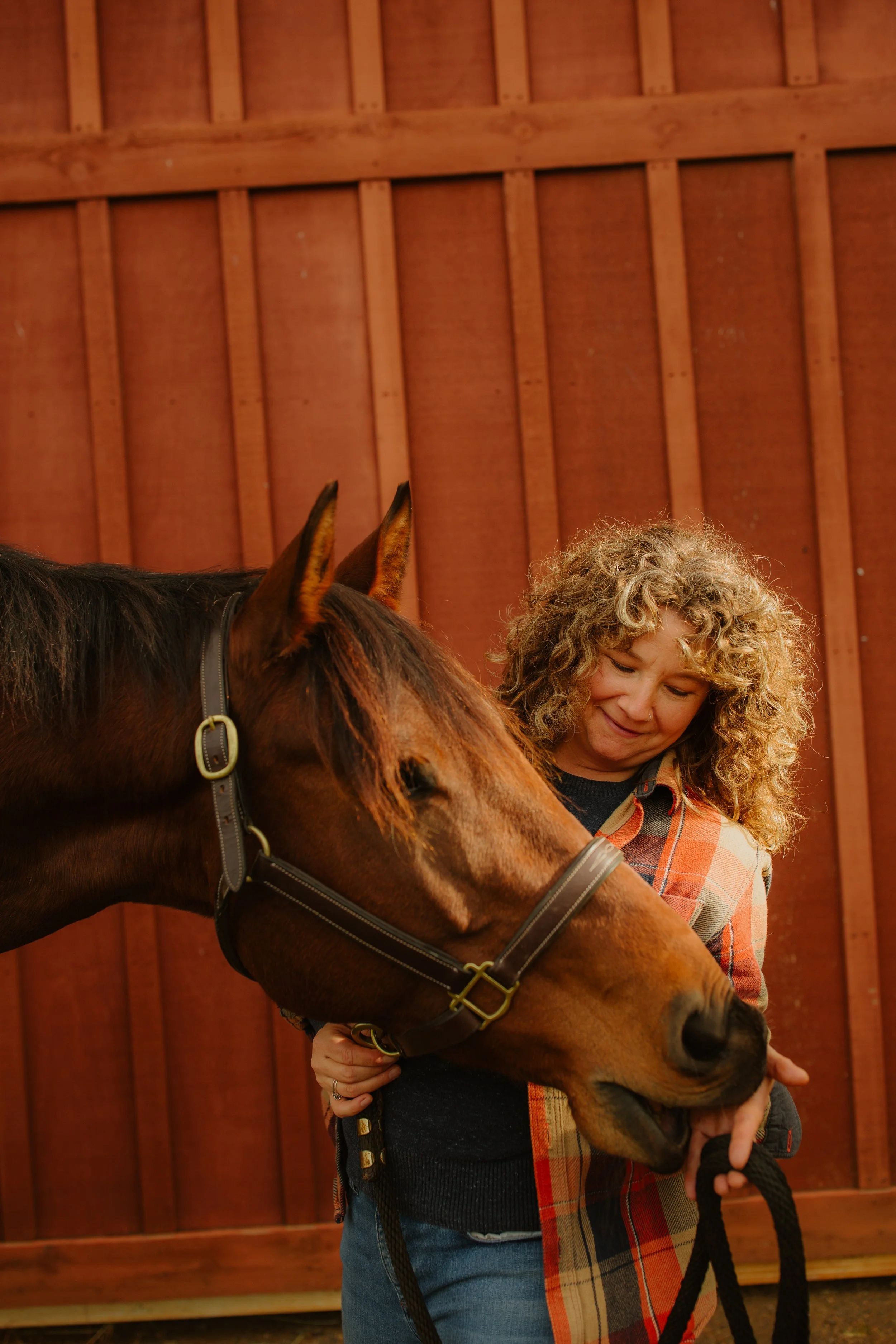
Internal Family Systems (IFS) is an evidence-based therapeutic practice originally developed by Dr. Richard Schwartz, LMFT. Also referred to as “parts work,” IFS asks us to think of our thoughts, feelings, behaviors, beliefs, and body sensations as “parts” of us that exist inside and can be likened to an internal family. Just like family members, parts have different perspectives, identities, different ages, and different ideas about how to do things. Depending on which part or parts of us are in charge, we will make different choices about how to proceed in various situations.
Parts
IFS emphasizes that many of our internal parts are protective; they are concerned with keeping us physically and emotionally safe. While our protective parts are always working on our behalf, they are not always aligned on the best ways to navigate challenging situations and they are not always particularly skilled in doing their protective jobs.
In addition to protective parts, IFS also theorizes that we have vulnerable, wounded parts inside. These parts often hold negative beliefs such as, “I’m not good enough,” “I can’t trust myself,” or “I’m not capable.”
Imagine for a moment that you are driving to the barn for a lesson. On your way you start to think about your last lesson in which you almost fell off. You begin to internally log your mistakes and vow that you will do it differently today. You then notice as you’re driving that it’s a bit windy today, and think about all of the ways this could potentially spook your horse. When you get to the barn and you take your horse out of their stall, you notice that they are acting a bit frisky with the change in weather. As your horse fidgets in the cross-ties you convince yourself that they are wild and they are definitely going to behave badly. You say to your trainer as you get on, “this isn’t going to go well today.”
When I examine this scenario from a parts perspective, I think about what parts are active, what they are saying, and what they plan to do to keep you physically and emotionally safe. I notice a part that is vowing to fix whatever went wrong last time. I notice a part that is feeling anxious about the weather. I notice a part that is telling a story about the horse and their behavior. I notice a part that is convinced that their ride is doomed from the start!
Because this collection of parts is up, active and in-charge, they are going to jump-in to protect in whatever way they see fit. Just imagine having an anxious and reactive crowd inside shouting at you and taking the reins mid-ride. “Pull here! He’s going to take off! You better brace yourself! He may stop at the fence! Hey, remember that time when he spun and you fell off? He could do that again! Man, that was such an awful day. Hey that was only last year! Wow you really haven’t improved much over the year. You know So And So has really surpassed you. In fact you really kinda suck at this sport.” Meanwhile, your horse is left feeling confused and abandoned as this drama plays out internally.
Self
Luckily, in addition to reactive parts, IFS also emphasizes the “Self,” described as the core of our identity. IFS describes the Self through the eight Cs:
-Calm
-Clear
-Confident
-Connected
-Courageous
-Curious
-Compassionate
-Creative
IFS teaches that the Self or Self-Energy is always available as a resource or a guide, but not always easy to access. Self is often eclipsed by protective parts or wounded parts or both.
Going back to the scenario above, imagine if Self were in charge, or that we had access to Self-Energy. Like a smart, sensible, trustworthy internal leader, Self could step in and take the lead. Self could offer calm, clarity, and confidence. Self would remind everyone to stay connected to and curious with their horse. Self -Energy is exactly what our horse is needing from us, which brings us to IFIO.
Intimacy From the Inside Out (IFIO), established by Toni Herbine-Blank LMFT, is a model of couples therapy that uses IFS concepts. IFIO illustrates how an individual’s various parts can impact the parts of their partner, often resulting in negative patterns of interaction.
If I am approaching my partner, in this case my horse, with reactivity, anxious parts, worrisome parts, and parts with presumptuous narratives about their experience (“he is wild because it is cold and windy and he is going to be naughty”), my horse is going to respond defensively. Alternatively, if I am able to approach my horse with clarity, calm, curiosity, and connection, feeling confident in my own ability to be in relationship with them, our interaction will likely proceed much differently.